
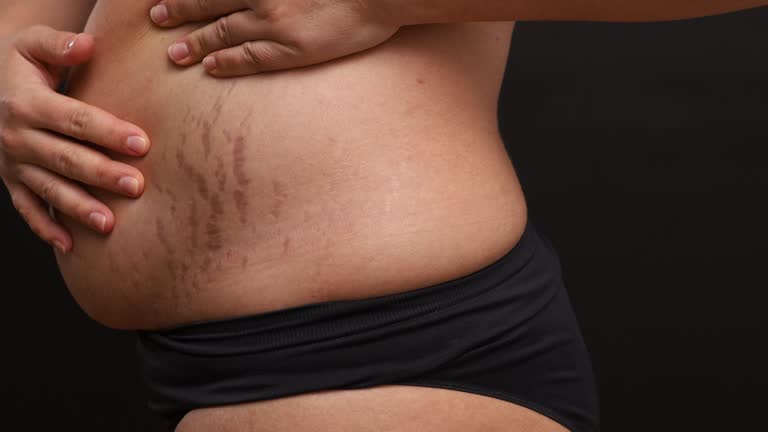
Stretch marks showed up without a single warning. Nobody sent them an invite, yet here they are living rent-free on your skin. Microneedling, backed by real science, might finally show them the door.
What Are Stretch Marks, Really?
Stretch marks are one of the most common skin concerns on the planet. Up to 90% of women and 40% of men develop them at some point in their lives. They are not dangerous. However, they can seriously affect how confident you feel in your own skin.
Scientifically, stretch marks go by the name striae distensae. They form when your skin stretches faster than it can physically handle. This rapid stretching tears the collagen and elastin fibers deep inside the dermis layer. Your body then fills that gap with scar tissue, leaving behind a visible, textured mark.
They appear on the belly, thighs, hips, buttocks, breasts, and upper arms. Pregnancy is one of the most common causes. So are puberty, rapid weight gain, and long-term steroid medications. In every case, the skin gets pulled beyond its natural elastic limit.
The Biology Behind Stretch Marks
Understanding stretch marks starts with knowing how your skin is actually built. Your skin has three main layers: the epidermis, the dermis, and the hypodermis.
The epidermis is the outer surface you see and touch every single day. The dermis lies beneath it and holds all the key structural proteins your skin depends on. Specifically, the dermis contains collagen fibers, elastin proteins, and specialized cells called fibroblasts.
Collagen gives your skin its strength and firmness. Think of it as the scaffolding holding your skin’s shape in place. Elastin, on the other hand, allows your skin to stretch and then snap right back to its original position. Together, these two proteins form an organized, interwoven mesh that keeps skin looking healthy and resilient.
When the skin stretches too quickly, this mesh begins to break down. The collagen matrix tears in specific spots. Fibroblasts cannot repair the damage fast enough to keep up. So the body fills the broken areas with scar tissue instead of healthy, organized skin.
That scar tissue behaves very differently from normal skin tissue. Early stretch marks appear red or purple because inflammation and blood vessel activity are still very active. Over time, however, they fade to silver or white as those blood vessels shrink. At that point, the marks become much harder, though not impossible, to treat effectively.
How Microneedling Works on Skin
Microneedling is a minimally invasive skin treatment that has gained serious scientific support in recent years. A small handheld device covered in sterile needles creates hundreds of tiny, controlled punctures across the treated skin. These micro-injuries immediately trigger your skin’s built-in healing response.
The needles used in professional microneedling sessions typically range from 0.5 to 2.5 millimeters in depth. Deeper needles penetrate further into the dermis layer. This deeper penetration is absolutely critical when you are targeting the scarred tissue where stretch marks live.
When the skin detects these tiny injuries, it floods the area with healing signals almost immediately. Growth factors pour into the treatment zone. Fibroblast cells rush in to begin rebuilding the damaged tissue. New collagen and elastin fibers then start forming over the following weeks.
Essentially, microneedling tricks the skin into restarting its own repair process. Picture it like rebooting a frozen computer system. The skin gets a forced, controlled restart. Healthier, more organized tissue gradually replaces the old, disorganized scar tissue over the course of several months.
Microneedling and Stretch Marks: The Science
Research into microneedling for stretch marks is genuinely encouraging for anyone considering treatment. A clinical trial published in 2025 in the Aesthetic Surgery Journal reported over 40% improvement in scar scores. Patients were evaluated at three to six months after completing their full treatment plan. The results were consistent and statistically significant.
Furthermore, meta-analyses published in Aesthetic Plastic Surgery and Lasers in Medical Science confirm these positive findings. Microneedling outperforms several non-laser skin treatment options in head-to-head comparisons. It also holds its own against laser therapies in terms of overall effectiveness, often with higher patient satisfaction scores.
One particularly important advantage is its safety record for darker skin tones. Laser treatments can sometimes trigger hyperpigmentation, or darkening, in people with higher melanin levels. Microneedling, by contrast, carries a significantly lower risk of this complication. That makes it a genuinely inclusive option for people across the full spectrum of skin tones.
The treatment works by rebuilding the exact same collagen network that tore and caused the stretch marks in the first place. It addresses the root biological problem rather than masking the surface appearance. Therefore, many dermatologists consider it one of the most logical and targeted treatment approaches currently available.
According to research on PubMed, microneedling consistently outperforms many topical-only treatments for striae distensae: https://pubmed.ncbi.nlm.nih.gov
Red vs White Stretch Marks: What Changes?
Not all stretch marks respond to microneedling at the same speed. The age and stage of the mark plays a major role in how well treatment works.
Red or purple stretch marks are called striae rubrae. These are newer marks, usually less than a year old. Because active inflammation is still present in red stretch marks, the skin is far more responsive to healing signals. Microneedling produces significantly better results on this type compared to any other.
White or silver stretch marks are called striae albae. These are older, fully matured scar marks. The blood vessels have already closed and retreated. The tissue has hardened and settled into a fixed pattern. As a result, these stretch marks are considerably more resistant to any form of treatment.
That said, microneedling still delivers real, visible improvements even on older white marks. Progress simply comes more slowly, and additional sessions may be required. Nevertheless, many patients with older stretch marks report meaningful softening, texture smoothing, and gradual color blending over time. Setting clear, realistic expectations from the very beginning makes the process far less frustrating.
What to Expect During a Session
Before treatment begins, a dermatologist or licensed practitioner applies a topical numbing cream to the target area. This typically takes about 30 to 45 minutes to take full effect. Once the skin is properly numbed, the microneedling device moves across the skin in careful, overlapping strokes.
The session itself usually lasts between 20 and 60 minutes. This depends entirely on the size of the area being treated. During the procedure, most patients feel only a mild vibrating or faint scratching sensation. The experience is genuinely far more tolerable than it sounds before you have tried it.
After treatment, your skin will look red and feel sensitive, similar to a mild sunburn. This redness normally fades on its own within 24 to 72 hours. Some patients also notice minor swelling or very small scabs at the needle sites, both of which are completely normal and expected.
Recovery is minimal compared to most other cosmetic skin procedures. Most people return to their everyday routine within one to two days. However, direct sun exposure should be avoided for at least one full week after each session. Harsh skincare products should also be kept away from the treated skin until it fully heals.
How Many Sessions Do You Need?
Microneedling is not a one-and-done solution, and being upfront about that matters. Most patients need multiple sessions to see meaningful, lasting results. Sessions are generally spaced four weeks apart to allow proper healing time between each one.
For newer or milder stretch marks, four to six sessions often produces solid results. For older or deeper marks, six to eight sessions or more may be required to reach the desired outcome. Your dermatologist will assess your skin personally and build a plan based on your specific situation. No two people’s skin responds the exact same way.
Additionally, collagen remodeling is a slow biological process by nature. New collagen fibers need months to fully mature and reorganize into healthy, functional tissue. Because of this, your final results may not become fully visible until three to six months after your last session. Patience is not just a virtue here, it is literally part of the treatment.
Some patients choose to combine microneedling with platelet-rich plasma therapy, commonly known as PRP. PRP uses concentrated growth factors extracted from your own blood to supercharge the body’s healing response. When added to microneedling, it can deliver faster and more dramatic improvements. Several studies support this combination as one of the most effective strategies for treating stubborn stretch marks.
Benefits of Microneedling for Stretch Marks
There are several compelling reasons to consider this treatment for stretch marks. First and most importantly, it is grounded in solid clinical evidence. Multiple independent studies consistently show real, measurable improvements in texture, color, and depth.
Moreover, the downtime is very short compared to alternative procedures. Ablative laser treatments can leave skin raw and fragile for days or even weeks. Microneedling recovery, by contrast, wraps up within 48 to 72 hours in most patients. That makes it far easier to fit into a normal, busy lifestyle.
Another significant benefit is that it works safely across all skin tones. Many skin treatments pose elevated risks for people with melanin-rich skin. Microneedling sidesteps most of those risks without sacrificing effectiveness. Dermatologists regularly cite this as one of the treatment’s strongest selling points.
Furthermore, microneedling improves overall skin quality beyond just the targeted stretch marks. The collagen boost firms and smooths the surrounding skin as well. So while you are focusing on one concern, your overall skin texture and tone improve too. That is an additional benefit most patients genuinely appreciate getting.
Cost is also comparatively reasonable. Professional microneedling sessions generally cost less than laser treatments per session. Additionally, the risk of serious complications is lower. Those two factors combined make it a more accessible option for a wider range of people.
Risks and Side Effects to Know
Like any cosmetic procedure, microneedling comes with some risks you should know going in. Understanding them ahead of time supports smarter decision-making.
The most common side effects include redness, swelling, and temporary skin sensitivity. These effects are short-lived and typically resolve within a few days without any intervention. Additionally, some patients notice minor bruising or small surface scabs at the needle sites, which heal on their own.
Infection is a rare but real complication. This risk increases significantly when using at-home microneedling devices rather than professional equipment. Professional tools are fully sterile, regularly maintained, and operated by trained hands. At-home rollers, however, can carry bacteria if they are not stored and cleaned properly between uses.
Hyperpigmentation, meaning unintended skin darkening, can occasionally occur after microneedling. The risk is higher in people with naturally deeper complexions, though still far lower than with laser treatments. A thorough consultation with a skin professional before your first session helps identify this risk early. Taking that step is always worth the time.
People who tend to form keloids, which are raised, overgrown scars, should approach microneedling with extra caution. The procedure introduces controlled injury to the skin. For individuals prone to keloid formation, this could potentially trigger abnormal scar growth. A dermatologist must carefully evaluate this risk before any treatment is scheduled.
Who Should Avoid Microneedling?
Microneedling is suitable for most healthy adults looking to reduce the appearance of stretch marks. However, it is simply not the right option for everyone.
People with active acne outbreaks in the treatment area should wait until their skin clears completely. Similarly, those living with eczema, psoriasis, or rosacea may find microneedling worsens their condition rather than helping it. Open wounds or active skin infections in the target zone are also clear disqualifiers for treatment.
Pregnant women should avoid elective cosmetic procedures during pregnancy. After delivery, stretch marks from the pregnancy experience can be addressed safely and effectively. Timing the treatment correctly is just as important as choosing the right treatment.
People on blood-thinning medications may experience more bleeding during the session than is typical. Anyone currently using isotretinoin, commonly known as Accutane, should stop the medication for at least six months before booking a microneedling session. That particular drug affects the skin’s healing mechanisms in ways that can seriously complicate the recovery process.
Stretch Marks and Body Positivity
Before jumping straight to any treatment, a brief but genuinely important conversation deserves space here. Stretch marks are not a flaw or a failure. They are a living record of what your body has experienced and survived.
Pregnancy, puberty, weight changes, and growth spurts are all completely normal parts of being human. Many people proudly call their stretch marks “tiger stripes” and wear them without apology. These marks carry real stories of strength, resilience, and transformation. Embracing them fully is a deeply valid and powerful choice.
At the same time, choosing to reduce their appearance is also completely valid. Seeking treatment does not indicate self-rejection or body shame. It simply means you want to feel more comfortable in your skin on your own terms. Both decisions deserve equal respect, without judgment from either direction.
Microneedling is a cosmetic option, not a moral requirement. The most important factor is that you make the choice for yourself, on your own timeline. Always speak with a qualified dermatologist before starting any treatment plan. They can help you build a realistic, personalized approach based on your skin type, mark stage, and personal goals.
Combining Microneedling with Other Treatments
Microneedling does not have to work alone. Pairing it with other evidence-backed therapies can meaningfully boost your overall results.
PRP therapy is among the most popular and well-researched add-ons. Your own blood is drawn and spun in a centrifuge to isolate plasma rich in growth factors. That plasma is then applied to the skin immediately after microneedling. The tiny channels created by the needles allow the PRP to absorb deeply, powerfully amplifying collagen production.
Radiofrequency microneedling is another advanced variation worth knowing about. It adds controlled heat energy to the needle tips during the treatment session. This extra heat triggers deeper collagen remodeling than standard microneedling achieves on its own. Research indicates it produces notably stronger improvements on persistent or older stretch marks.
Topical treatments like hyaluronic acid, vitamin C serums, and retinoids can further support skin recovery between sessions. These ingredients help maintain skin hydration and support ongoing collagen synthesis. They should only be introduced after the skin has fully healed from each microneedling session. Getting the timing right protects the quality of your results over the long term.
Professional vs At-Home Microneedling
At-home dermarollers are easy to find, cheap to buy, and widely marketed as a convenient alternative. They look similar to professional microneedling tools. However, the comparison pretty much stops there.
Professional devices penetrate skin much more deeply and with far greater precision. Licensed practitioners control the exact needle depth based on your individual skin assessment. The clinical environment is fully sterile and carefully controlled. Results from professional sessions are consistently stronger, safer, and more reliable.
At-home rollers typically use very short needles, around 0.2 to 0.5 millimeters in length. These depths can mildly improve how serums absorb into the skin surface. However, they do not penetrate the dermis deeply enough to meaningfully stimulate collagen remodeling where stretch marks actually live.
Moreover, incorrect at-home use can cause micro-tears, bacterial infections, and permanently worsened skin texture. The skin is particularly sensitive immediately after rolling, and using the wrong products right after can trigger serious irritation. For a concern as deep-rooted as stretch marks, professional treatment is clearly the smarter and safer investment.
Collagen, Elastin, and the Science of Skin Healing
Collagen and elastin are the two most critical structural proteins in the entire skin system. They work in tandem to keep skin firm, flexible, and capable of bouncing back from stress. Understanding how they work helps explain precisely why microneedling is such a logical treatment strategy.
Collagen provides tensile strength throughout the dermis. It acts like the scaffolding that keeps your skin’s shape intact under pressure. Elastin allows your skin to stretch when needed and then return to its original form afterward. Together, these proteins form a dense, organized matrix that supports healthy, youthful-looking skin.
When stretch marks form, this organized matrix tears and collapses in specific zones. The resulting scar tissue completely lacks the interwoven, structured arrangement of healthy dermis. Consequently, the affected area looks different, feels different, and reflects light differently from the surrounding skin.
Microneedling activates fibroblast cells to dramatically increase production of both proteins. Over the following months, the new collagen and elastin gradually reorganize and mature into functional tissue. The treated skin area begins to structurally resemble healthy tissue more and more over time. This entire biological process is deeply scientific and explains clearly why treatment results require patience to fully develop.
Nutrition and Skin Recovery After Microneedling
What you eat matters more to skin healing than most people give it credit for. Providing your body with the right nutrients speeds recovery and directly amplifies your microneedling results.
Vitamin C is absolutely essential for collagen synthesis at the cellular level. Without enough of it, fibroblasts simply cannot produce new collagen effectively. Oranges, strawberries, bell peppers, and broccoli are all excellent natural sources. Adding these regularly to your diet actively supports your treatment progress from the inside out.
Zinc is another critical mineral that supports wound healing throughout the body. It powers the enzymes involved in collagen formation and skin tissue repair. Pumpkin seeds, lentils, chickpeas, and lean meats are all solid zinc sources. Getting adequate zinc in your diet helps accelerate post-treatment recovery in a real, measurable way.
Protein provides the actual amino acid building blocks that collagen is made from. Proline, glycine, and hydroxyproline are three amino acids especially important for building new collagen fibers. Lean meats, eggs, beans, and fish all deliver these building blocks in meaningful quantities. Eating enough protein consistently gives your skin the raw materials it needs to rebuild successfully.
Staying well hydrated supports skin elasticity and the overall healing process from within. Dehydrated skin heals more slowly and less effectively than properly hydrated skin. Drinking adequate water throughout each day is one of the simplest supportive habits you can build. Combined with regular microneedling sessions, these small nutrition habits add up to a noticeably bigger difference.
The Role of Sleep in Skin Regeneration
Sleep is one of the most underrated recovery tools available to anyone undergoing microneedling treatment. Your skin does the majority of its active repairing while you sleep each night. This biological connection becomes especially important in the days following each treatment session.
During deep sleep stages, your body releases human growth hormone. That hormone directly stimulates cell turnover, tissue regeneration, and new collagen synthesis. Without enough quality sleep, these restorative processes slow down considerably. Your microneedling results may take noticeably longer to appear as a direct result.
Poor sleep also raises cortisol levels throughout the body. Elevated cortisol actively breaks down existing collagen in the skin. This counteracts the very collagen you are trying to build through your microneedling sessions. Protecting your sleep is therefore directly protecting your treatment investment.
Aim for seven to nine hours of quality sleep every night, particularly in the days immediately following a session. Building a consistent bedtime routine trains your body to enter deep, restorative sleep cycles more reliably. Your skin heals faster, and your microneedling results develop more fully, when you truly rest.
Managing Expectations and Staying the Course
Microneedling is genuinely effective, but it is not a miracle solution that erases everything overnight. Going in with grounded, realistic expectations makes the entire process far more rewarding.
Most patients see noticeable improvement, but very few achieve complete elimination of their stretch marks. Clinical studies report average improvements of 40% or more in measurable scar scores. Individual outcomes vary based on skin type, the age of the marks, and how consistently treatment sessions are completed.
Older, white stretch marks are harder to treat than newer red ones. More sessions and slower progress are common with mature marks. Even so, many patients with older stretch marks report meaningful texture improvement, color softening, and smoother skin over the course of a full treatment plan. Real progress happens, even when it moves at its own pace.
Consistency is the single most important factor in your outcome. Missing sessions or ignoring post-care instructions slows your progress significantly. Following the schedule your dermatologist sets out gives you the best realistic chance of strong results. Approach the entire process as a commitment rather than a shortcut.
Are Stretch Marks Worth Treating? A Final Look
Stretch marks are incredibly common, completely natural, and not medically harmful in any way. You are not required to treat them. However, if they affect your confidence or daily comfort, you deserve access to effective, evidence-based options.
Microneedling offers a science-backed, minimally invasive path toward visibly reducing stretch marks over time. The biological science is sound. The clinical research is solid. Patient satisfaction rates across multiple studies are consistently encouraging.
Pairing microneedling with proper nutrition, quality sleep, good hydration, and a realistic mindset gives you the strongest possible platform for results. This is not a surface-level cosmetic trick. It is a biologically grounded strategy rooted in how your skin actually heals and rebuilds itself.
Talk to a board-certified dermatologist before starting any treatment plan for your stretch marks. Your skin is unique, and your treatment should be tailored to reflect that. With the right professional guidance, consistent effort, and a little patience, real improvement in your stretch marks is absolutely achievable.
Sources and Further Reading
- Aesthetic Surgery Journal (2025) – Microneedling for Striae Distensae Clinical Trial: https://pubmed.ncbi.nlm.nih.gov
- National Institutes of Health (PMC) – Microneedling Research and Collagen Induction Therapy: https://pmc.ncbi.nlm.nih.gov
- Aesthetic Plastic Surgery Journal – Meta-Analysis on Microneedling Efficacy: https://link.springer.com
- Dr. Sermed Mezher – “POV: You Have Stretch Marks” (YouTube Short): https://www.youtube.com
- Lasers in Medical Science – Comparative Study on Stretch Mark Treatments: https://link.springer.com
- PubMed – Striae Distensae Treatment Overview: https://pubmed.ncbi.nlm.nih.gov
- American Academy of Dermatology – Stretch Marks: Overview and Treatment: https://www.aad.org