
Introduction
Sitting too long might just be the sneakiest health trap of the modern age. Your chair could be doing more damage than you think. Read on to find out how your body breaks down the longer you sit, and what you can do about it.
Sitting Too Long: The Modern Health Crisis Nobody Talks About
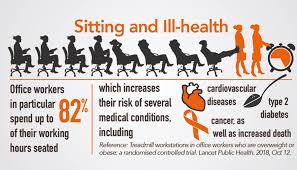
Picture this. You wake up, sit at breakfast, sit in your car, sit at your desk for eight hours, sit at dinner, and sit on the couch. By the end of the day, you have probably been seated for 10 to 12 hours straight. Sounds familiar? You are not alone. Millions of people live this exact lifestyle every single day.
Sitting too long has become a global health problem. In fact, the World Health Organization now lists physical inactivity as the fourth leading risk factor for global mortality. That is a big deal. We are talking about a habit that seems completely harmless but is quietly chipping away at your body from the inside.
So, before you dismiss this as another boring health lecture, keep reading. The science behind what prolonged sitting does to your body is genuinely fascinating, and a little alarming too.
The Biology Behind Sitting Too Long
To understand the damage, you first need to understand what happens inside your body when you sit.
When you are standing or moving, your muscles are constantly contracting. These contractions help push blood through your veins. They also stimulate enzymes that break down fat and sugar in your bloodstream. However, when you sit for long periods, most of those muscles go completely quiet.
The large muscles in your legs and back, like the gluteus maximus and the hamstrings, are among the biggest in your body. They burn a lot of energy when active. But sitting too long shuts them down almost entirely. As a result, your metabolism slows down significantly.
Research from the University of Missouri found that prolonged inactivity causes a drop in the enzyme called lipoprotein lipase (LPL). This enzyme is responsible for breaking down fat in the blood. When LPL activity drops, fat starts building up in your arteries and bloodstream instead of being used as fuel. That is where the real trouble begins.
[Source: Bey, L., & Hamilton, M.T. (2003). Suppression of skeletal muscle lipoprotein lipase activity during physical inactivity: a molecular reason to maintain daily low-intensity activity. Journal of Physiology. https://physoc.onlinelibrary.wiley.com/doi/10.1113/jphysiol.2003.045591]
Sitting Too Long and Your Cardiovascular System
Your heart is a pump, and it loves movement. When you sit still for hours, that pump has to work a lot harder to push blood through sluggish, compressed veins.
Blood tends to pool in the lower legs and feet during prolonged sitting. This can lead to a dangerous condition called deep vein thrombosis (DVT), where blood clots form in the deep veins of the legs. These clots can break loose and travel to the lungs, causing a pulmonary embolism, which can be fatal.
Beyond clots, sitting too long raises blood pressure over time. It increases levels of LDL cholesterol, the bad kind, while lowering HDL cholesterol, the good kind. Together, these changes dramatically raise your risk of heart disease.
A large-scale study published in the journal Circulation found that people who sat for more than 10 hours a day had a significantly higher risk of heart disease and stroke than those who sat for fewer than 5 hours daily. Furthermore, this risk remained high even in people who exercised regularly outside of their sitting hours. That is a sobering finding.
[Source: Matthews, C.E., et al. (2012). Amount of time spent in sedentary behaviors and cause-specific mortality in US adults. American Journal of Clinical Nutrition. https://academic.oup.com/ajcn/article/95/2/437/4578292]
What Sitting Too Long Does to Your Spine and Muscles
Your spine is a marvel of engineering. It is designed for movement. Sitting too long, especially with poor posture, puts enormous stress on the discs, muscles, and ligaments that hold it all together.
When you sit, the pressure on your lumbar discs increases by about 40 percent compared to standing. Over time, this leads to disc degeneration, herniated discs, and chronic lower back pain. Back pain is currently the leading cause of disability worldwide, and prolonged sitting is one of the biggest contributors.
Your hip flexors also take a serious hit. These muscles run from your lower back through your pelvis and attach to the top of your thigh bone. When you sit all day, these muscles shorten and tighten. Eventually, they pull your pelvis into an anterior tilt, which throws your entire spine out of alignment.
Additionally, your glutes become weak and inhibited from sitting too long. This condition even has a name: gluteal amnesia. Your glutes literally forget how to fire properly. This leads to compensatory movement patterns that can cause pain in the knees, hips, and lower back.
[Source: Callaghan, J.P., & McGill, S.M. (2001). Low back joint loading and kinematics during standing and unsupported sitting. Ergonomics. https://www.tandfonline.com/doi/abs/10.1080/00140130110047494]
Sitting Too Long and Metabolic Disease
Your metabolism is the engine that keeps your body running. Sitting too long throws a wrench right into that engine.
Within just two hours of continuous sitting, your body starts to show signs of metabolic dysfunction. Insulin sensitivity drops. This means your cells become less responsive to insulin, the hormone that allows glucose to enter your cells for energy. As a result, blood sugar levels rise.
Over time, this pattern can lead to insulin resistance, which is the gateway to type 2 diabetes. Studies have shown that people who sit for more than 8 hours a day have a 112 percent higher risk of developing type 2 diabetes compared to those who sit for fewer than 4 hours.
Sitting too long also contributes to metabolic syndrome, a cluster of conditions that includes high blood sugar, high blood pressure, excess belly fat, and abnormal cholesterol levels. Having three or more of these conditions at once greatly increases your risk of heart disease, stroke, and diabetes.
[Source: Biswas, A., et al. (2015). Sedentary Time and Its Association with Risk for Disease Incidence, Mortality, and Hospitalization in Adults. Annals of Internal Medicine. https://www.acpjournals.org/doi/10.7326/M14-1651]
Your Brain Does Not Like Sitting Too Long Either
Here is something most people do not expect. Sitting too long is also bad for your brain.
Physical movement increases blood flow to the brain. It stimulates the release of brain-derived neurotrophic factor (BDNF), a protein that helps grow and maintain brain cells. When you sit still for hours, this flow of nourishment to your brain decreases.
Studies have linked prolonged sitting to reduced thickness in the medial temporal lobe, the brain region responsible for memory formation. This is particularly alarming because thinning in this area is an early sign of cognitive decline and dementia.
Moreover, sitting too long can worsen anxiety and depression. Movement triggers the release of endorphins and serotonin. Without regular movement breaks, these feel-good chemicals stay low. As a result, mood suffers, focus fades, and stress levels climb.
A 2018 study published in PLOS ONE found that people who spent more time sitting had higher rates of depression and anxiety symptoms. Notably, this effect was present even after accounting for exercise habits outside of sitting periods.
[Source: Biswas, A., et al. (2015). Sedentary Time and Its Association with Risk for Disease Incidence. https://www.acpjournals.org/doi/10.7326/M14-1651]
The Sitting Too Long and Cancer Connection
This one might surprise you. Sitting too long has been linked to an increased risk of several types of cancer.
Research suggests that prolonged sedentary behavior is associated with a higher risk of colon cancer, endometrial cancer, and breast cancer. The mechanisms are not entirely clear, but several theories exist.
First, sitting too long raises levels of C-reactive protein and other inflammatory markers. Chronic inflammation is a well-known driver of cancer development. Second, excess body fat, which accumulates faster with sedentary behavior, produces estrogen and other hormones that can stimulate the growth of certain cancer cells.
Third, reduced bowel motility from prolonged sitting may increase the contact time between carcinogens and the intestinal lining. This could raise the risk of colon cancer over time.
A comprehensive meta-analysis published in the Journal of the National Cancer Institute reviewed data from over 4 million adults and found that each two-hour increase in daily sitting time raised colon cancer risk by 8 percent and endometrial cancer risk by 10 percent. These are not small numbers.
[Source: Biswas A et al. Sedentary Time and Its Association with Risk for Disease Incidence, Mortality, and Hospitalization in Adults. Ann Intern Med. 2015. https://www.acpjournals.org/doi/10.7326/M14-1651]
Sitting Too Long and Your Posture: A Vicious Cycle
Poor posture and sitting too long feed each other in a vicious, self-reinforcing cycle.
When you sit for hours, your chest muscles tighten and shorten. At the same time, your upper back muscles stretch and weaken. This imbalance pulls your shoulders forward and your head follows. The result is the all-too-familiar hunched, forward-head posture.
Carrying your head even one inch forward doubles the effective weight your neck muscles must support. In a neutral position, your head weighs about 10 to 12 pounds. Tilt it forward by just two inches, and the strain on your neck jumps to roughly 32 pounds. That kind of sustained pressure causes chronic neck pain and tension headaches.
Furthermore, rounded shoulders compress your lungs and ribcage. This makes breathing shallower and less efficient. Less oxygen reaches your brain and muscles. Consequently, fatigue, brain fog, and reduced physical performance follow.
Correcting this cycle requires deliberate effort. Simply knowing that sitting too long causes these changes can motivate you to take more breaks and adopt better postural habits.
The Science of Sedentary Behavior vs. Exercise
Here is an important distinction. Sitting too long is a separate health risk from simply not exercising. These are two different problems.
You can exercise for 30 minutes every morning and still face serious health risks from sitting for the other 10 to 12 hours of your day. Research has coined the term “active couch potato” to describe this pattern. People who exercise but spend most of the rest of their day seated still show elevated markers of cardiovascular disease, metabolic dysfunction, and inflammation.
The reason lies in the biology. Exercise is an intense, short burst of activity that confers its own set of benefits. However, it cannot fully compensate for the hours of muscle inactivity and metabolic slowdown that come with prolonged sitting.
What your body needs is low-intensity movement distributed throughout the entire day, not just concentrated into one workout session. Standing, walking, and even light fidgeting throughout the day keeps your muscles engaged, your metabolism ticking, and your blood circulating properly.
[Source: Katzmarzyk, P.T., et al. (2009). Sitting time and mortality from all causes, cardiovascular disease, and cancer. Medicine and Science in Sports and Exercise. https://journals.lww.com/acsm-msse/fulltext/2009/05000/sitting_time_and_mortality_from_all_causes,.25.aspx]
Sitting Too Long in Children and Young Adults
This is not just a problem for adults. Sitting too long is increasingly affecting children and teenagers too.
The average child today spends over seven hours a day in front of screens. Add school hours on top of that, and many kids are sitting for 10 or more hours daily. This is setting the stage for metabolic disease, obesity, and musculoskeletal problems much earlier in life.
Studies show that children who are more sedentary develop thicker carotid artery walls by their teen years. This is an early marker of atherosclerosis, the hardening of arteries that leads to heart attacks and strokes decades later.
Young adults working desk jobs are also at risk. Back pain is no longer just an older adult problem. It is now one of the most common complaints among people in their 20s and 30s. Sitting too long during these formative working years can set a damaging pattern that is hard to break later.
How Sitting Too Long Affects Digestion
Your gut also suffers when you stay seated for long periods.
When you sit, particularly in a hunched position, your abdominal organs are compressed. This slows down the movement of food through your digestive system. The result is slower digestion, bloating, constipation, and discomfort.
Physical movement, even a gentle walk after meals, stimulates the muscles of your digestive tract. These muscles, called smooth muscles, work in a wave-like motion called peristalsis to move food along. When you sit still after eating, peristalsis slows down dramatically.
Sitting too long has also been associated with increased risk of acid reflux. When you are seated and slouching, stomach acid is more likely to travel upward into the esophagus. Over time, chronic reflux can damage the lining of the esophagus and increase cancer risk.
Sitting Too Long and Its Effect on Hormones
Your endocrine system, which controls hormones, is also impacted by how long you sit.
Cortisol, the stress hormone, tends to rise with prolonged inactivity. Elevated cortisol is linked to belly fat accumulation, immune suppression, and mood disorders. Testosterone and growth hormone levels, on the other hand, tend to drop with sedentary behavior. These hormones are essential for maintaining muscle mass, bone density, and energy levels.
Sitting too long also disrupts the production of leptin and ghrelin, the hormones that control hunger and satiety. This disruption can trigger increased appetite and cravings for high-calorie foods. Over time, this leads to overeating and weight gain, which further compounds all the other health risks.
Practical Steps to Break the Sitting Too Long Habit
Now that you understand the damage, here is the encouraging part. You can reverse many of these effects simply by moving more throughout your day.
The key is not necessarily to sit less in total, though that helps too. Rather, the goal is to interrupt prolonged sitting with short movement breaks. Research suggests that taking a two to five minute walking break every 30 to 60 minutes is enough to reset your metabolism, improve blood sugar control, and reduce cardiovascular risk.
Set a timer on your phone or computer to remind you to stand up and move. Walk to a colleague’s desk instead of emailing. Take calls standing up or walking. Use the stairs instead of the elevator. Park further away from the entrance. These small changes add up significantly over time.
Standing desks can also help, but only if used correctly. Alternating between sitting and standing every 30 to 45 minutes provides the most benefit. Standing all day has its own set of problems, including varicose veins and lower back fatigue. The goal is movement, not just standing still.
[Source: Dunstan, D.W., et al. (2012). Breaking Up Prolonged Sitting Reduces Postprandial Glucose and Insulin Responses. Diabetes Care. https://diabetesjournals.org/care/article/35/5/976/38344]
Stretches and Exercises to Counter Sitting Too Long
Targeted stretching and strengthening exercises can help reverse the damage from sitting too long.
To release tight hip flexors, try the low lunge stretch. Kneel on one knee, push your hips forward, and hold for 30 seconds on each side. This lengthens the muscles that shorten from constant sitting. Doing this twice daily can significantly reduce lower back pain.
To strengthen weakened glutes, try glute bridges. Lie on your back with knees bent, push your hips toward the ceiling, and squeeze your glutes at the top. Hold for two seconds and repeat 15 times. This reactivates the muscles that go dormant from sitting too long.
For rounded shoulders and tight chest muscles, try the doorway chest stretch. Place your forearms on either side of a door frame and gently lean forward. Hold for 30 seconds. This opens up the chest and counteracts the hunching posture that forms from prolonged sitting.
For your spine, the cat-cow stretch is simple and effective. On all fours, alternate between arching and rounding your back slowly. Do this for one to two minutes. It restores mobility to the lumbar and thoracic spine after hours of compression.
Sitting Too Long at Work: What Your Employer Should Know
Workplace health is increasingly on the radar of progressive companies. The evidence is clear. Sedentary work environments reduce productivity, increase sick days, and raise long-term healthcare costs.
Ergonomic assessments, standing desk options, walking meetings, and scheduled movement breaks are all effective workplace interventions. Studies show that even brief standing breaks during the workday improve employee focus, mood, and energy levels.
Employees who move more are also more creative. Standing or walking while thinking stimulates divergent thinking, the kind of creative problem-solving that drives innovation. So, encouraging movement at work is not just about health. It is good for the bottom line too.
If you work from home, the temptation to sit all day is even greater. Create a schedule that includes regular movement breaks. Use a kitchen timer, a smartwatch, or a desk app to build this habit. Your body and your productivity will both thank you.
Sitting Too Long: The Numbers Are Stark
To put all of this in perspective, consider these statistics.
People who sit for more than 6 hours a day are 40 percent more likely to die within 15 years than those who sit for fewer than 3 hours, even if they exercise regularly. Globally, physical inactivity costs healthcare systems over $67 billion per year. Sitting too long contributes to over 3.2 million deaths annually worldwide.
These are not small or theoretical risks. They are real, measurable consequences of a modern lifestyle that has quietly become dangerous. The good news is that awareness is the first step to change. And change, even in small doses, can make a big difference.
Conclusion: Sitting Too Long Does Not Have to Be Your Story
Your body was built to move. Every system, from your heart and lungs to your gut and brain, works better when you are active throughout the day.
Sitting too long is one of the most common and underappreciated health threats of our time. The science is clear. Prolonged sedentary behavior damages your cardiovascular system, weakens your muscles, disrupts your metabolism, clouds your mind, and even raises your cancer risk.
The solution is not to run marathons or radically overhaul your life overnight. Rather, it is to build small, consistent movement habits into your existing daily routine. Stand up more. Walk more. Stretch more. Your body will respond quickly and positively.
Do not wait until your back is screaming or your doctor delivers bad news. Start moving more today. Your future self will be grateful you did.
- Occupational Sitting Time, Leisure Physical Activity, and All-Cause and Cardiovascular Disease Mortality (Gao et al., 2024, JAMA Network Open) – https://jamanetwork.com/journals/jamanetworkopen/fullarticle/2814094
- A twin-driven analysis on early aging biomarkers and associations with sitting-time and physical activity (Bruellman et al., 2024, PLOS One) – https://journals.plos.org/plosone/article?id=10.1371/journal.pone.0308660
- Accelerometer-Measured Sedentary Behavior and Risk of Future Cardiovascular Disease (Ajufo et al., 2025, Journal of the American College of Cardiology) – https://www.jacc.org/doi/10.1016/j.jacc.2024.10.065
- Sitting Time, Physical Activity and Mortality: A Cohort Study (Liu et al., 2024) – Recent evidence reinforcing independent mortality risks. (See related coverage or search PubMed for full details.)