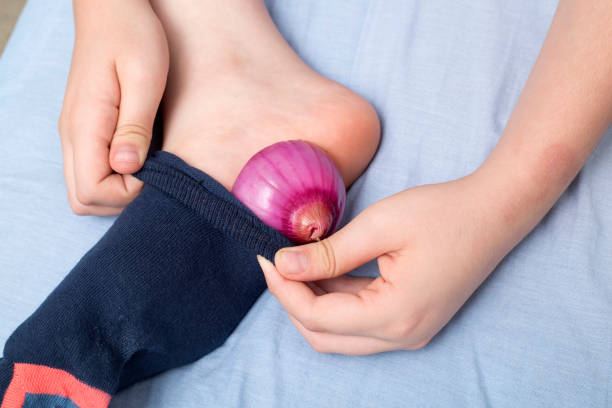
Onion foot detox is one of the most shared health hacks circling the internet right now. People slice raw onions and tape them to their feet before bed. Science, though, tells a completely different story.
What Is the Onion Foot Detox, Anyway?
You have probably spotted this hack somewhere on TikTok, YouTube, or Instagram. Someone slices a raw onion cleanly in half. Next, they tape it firmly to the bottom of each foot. Finally, they sleep through the night expecting cleaner blood, less pain, and stronger immunity.
The onion foot detox is not a new idea, surprisingly. It has been floating around folk medicine circles for decades. Social media, however, gave it a massive second life and millions of new believers. Traditionally, some cultures used onions to treat fevers and infections. People believed onions could draw out illness and bacteria directly through the skin.
Today, the claims sound more polished and “scientific.” Supporters argue that sulfur compounds and flavonoids inside onions absorb through the feet and enter the bloodstream. From there, they supposedly detox the liver, reduce inflammation, and power up the immune system.
Sounds convincing, right? Well, not quite. Let us look at what your body actually says about all of this.
The Science Behind Your Skin
Before dismissing or accepting the onion foot detox, you need to understand one critical thing: your skin. Your skin is the largest organ in your entire body. It covers roughly 1.7 square meters of surface area in the average adult. Most importantly, your skin has a primary job, and that job is to keep things out.
Your skin consists of three main layers working together. The outermost layer is called the epidermis. Beneath it sits the dermis, which contains blood vessels, nerves, and hair follicles. Below both of these lies the subcutaneous tissue, made mostly of fat cells.
The topmost section of the epidermis has a special name: the stratum corneum. Think of this layer as a very well-built brick wall. Dead skin cells stack tightly together like bricks. Lipids, which are fatty molecules, fill the gaps between them like mortar. This structure keeps water locked inside your body. Additionally, it blocks most external substances from getting in.
Now here is the critical detail. The stratum corneum on the soles of your feet is significantly thicker than on the rest of your body. Decades of walking, pressure, and friction build up extra layers of compacted dead skin cells. Consequently, your foot soles are among the hardest spots on the entire body to absorb anything through.
This single biological fact dismantles the foundation of the onion foot detox claim entirely.
[Source: National Institutes of Health, Skin Anatomy Overview: https://www.ncbi.nlm.nih.gov/books/NBK470464/]
Can Onions Really Absorb Through Your Feet?
The short answer is no. However, the longer answer is far more interesting, so let us break it down properly.
Onions contain genuinely powerful compounds. Quercetin, sulfur, allicin, and various flavonoids make onions one of the healthiest foods on the planet. These molecules, however, each have specific sizes and chemical properties. Not every molecule can pass through skin.
Transdermal absorption, meaning absorption through the skin, works only for very specific molecules. For example, nicotine patches, hormone replacement patches, and certain pain medications use transdermal delivery successfully. These pharmaceutical products work because their active molecules are small, fat-soluble, and specifically engineered to penetrate skin layers.
Onion compounds, by contrast, are mostly water-soluble. Water-soluble compounds do not move easily through the fat-rich skin barrier. Furthermore, the relevant molecules in onions are relatively large in size. Large, water-soluble molecules simply cannot squeeze through the tightly packed stratum corneum.
Therefore, what actually happens during an onion foot detox is very simple. Onion compounds sit on the surface of your feet. They stay there until you wash them off in the morning. No quercetin enters your bloodstream. No sulfur reaches your liver. The whole process is essentially a very fragrant, very ineffective sock.
[Source: Journal of Controlled Release, Transdermal Drug Delivery Science: https://www.sciencedirect.com/journal/journal-of-controlled-release]
The Onion Foot Detox and the Liver Myth
One of the biggest claims attached to the onion foot detox involves liver detoxification. Supporters specifically say that onion compounds absorb through the feet, travel to the liver, and help it remove harmful toxins. On the surface, this sounds almost reasonable. In reality, though, it completely misunderstands how your liver actually works.
Your liver is already one of the most powerful detox systems in the known universe. It processes everything entering your bloodstream around the clock. It breaks down alcohol, medications, environmental pollutants, and metabolic waste products. The liver uses specialized enzymes, particularly the cytochrome P450 family, to chemically transform toxins into water-soluble compounds. Your kidneys then filter those transformed compounds and remove them through urine.
Your liver does this job brilliantly every single day. It does not need onions on the bottoms of your feet to do it. Moreover, no published clinical study has ever demonstrated that topical onion application improves liver enzyme function. Not one. The idea that your liver is sitting around waiting for foot-applied onion juice is, biologically speaking, quite absurd.
[Source: American Liver Foundation, How the Liver Works: https://liverfoundation.org/health-wellness/healthy-lifestyle/]
For more on liver-supporting foods that actually help through digestion, this resource covers foods that either harm or protect liver function in practice: [https://greendakota.com/7-foods-that-harm-the-liver-and-healthier-replacements-you-can-try/]
What Quercetin Actually Does in Your Body
Quercetin is a real compound with real, impressive benefits. However, every single one of those benefits requires you to eat it. Let us follow quercetin’s actual journey through your body.
When you eat an onion, your digestive system begins breaking it down in the stomach. Quercetin then moves into your small intestine. The lining of the small intestine contains specialized cells called enterocytes. These cells absorb quercetin and release it into the portal bloodstream. From there, quercetin travels directly to the liver for initial processing, then circulates throughout your body.
Once in your bloodstream, quercetin does impressive work. Studies published in the journal Nutrients confirm that quercetin reduces the production of pro-inflammatory cytokines. Cytokines are signaling proteins that trigger and sustain inflammation. By suppressing certain cytokines, quercetin reduces chronic inflammatory responses effectively.
Additionally, quercetin functions as a powerful antioxidant. It neutralizes free radicals, which are unstable molecules that damage cell membranes, proteins, and DNA. Over time, unchecked free radical damage contributes to aging, cancer risk, and neurodegenerative disease. Quercetin helps slow all of that down significantly.
Furthermore, recent research suggests quercetin has antiviral properties and may support cardiovascular health by improving blood vessel flexibility. These are genuinely exciting findings backed by peer-reviewed research. However, absolutely none of these benefits happen through foot application. The onion foot detox bypasses the digestive system entirely. Therefore, the quercetin never enters circulation, and you receive none of these documented benefits.
[Source: Nutrients Journal, Quercetin and Inflammation: https://www.mdpi.com/journal/nutrients]
The Truth About Detox and Your Organs
The word “detox” circulates endlessly in wellness culture. However, it is worth understanding what detoxification actually means from a biological standpoint. True detoxification happens inside your body continuously, every single day, without any external help.
Your liver, kidneys, lungs, lymphatic system, and even your skin all contribute to natural detox processes simultaneously. The liver chemically alters toxic compounds as described above. Your kidneys filter your entire blood supply approximately 200 times per day. Each time, they extract waste products and send them out of the body in urine. Your lungs remove carbon dioxide, a metabolic waste gas, with every single exhale. Your lymphatic system circulates white blood cells and carries cellular debris away from tissues. Even your skin contributes by excreting small amounts of waste through sweat.
These systems are not broken. They do not need help from superfoods applied to the feet. Furthermore, the idea that your body contains a dangerous buildup of “toxins” that external hacks can remove is itself a myth. Your body does not work like a clogged drain. It is a dynamic, self-regulating biological system. When the true detox organs fail, it is called organ failure, and the treatment is medical, not a vegetable wrap.
[Source: Kidney Health Australia, How Your Kidneys Work: https://kidney.org.au/your-kidneys/what-do-kidneys-do]
Why the Onion Foot Detox Goes Viral Again and Again
So if the science is so clear, why does the onion foot detox keep spreading across the internet? The answer involves human psychology far more than biology.
First, it is incredibly cheap and simple. Almost everyone has onions at home. Almost everyone has tape. Additionally, the hack produces a visible “result” overnight. When people unwrap their feet in the morning, the onion has turned dark and discolored. This visual change feels like proof that toxins came out of the body.
In reality, though, that discoloration comes from a simple chemical reaction. Onions oxidize rapidly when exposed to moisture and body heat. The color change is a reaction between onion compounds and sweat, nothing more significant than an apple turning brown after you cut it.
Moreover, people often genuinely feel better after trying it. This comes largely from the placebo effect. The placebo effect is a thoroughly documented psychological and neurological phenomenon. When your brain expects healing, it can generate real perceived improvements through endorphin release and reduced anxiety. The act of doing something deliberate for your health creates a sense of control, which itself reduces stress hormones.
Beyond that, people who try the onion foot detox often make other positive changes at the same time. They may drink more water, sleep earlier, or eat more carefully. These secondary changes produce real results, but those results get attributed to the onion. Social media then amplifies this confirmation bias at lightning speed.
What Doctors Say About Foot Wraps
Medical professionals are consistently unimpressed by the onion foot detox. Dr. Myro Figura, a physician who reviewed this trend on his YouTube channel, stated plainly that the thick skin on the soles of your feet creates a barrier that onion compounds simply cannot cross. His verdict: stinky feet, zero systemic benefits.
Dermatologists across the board agree with this assessment. The fundamental challenge is that even pharmaceutical-grade transdermal patches, which are engineered specifically for skin absorption, struggle to deliver certain molecules effectively. An onion slice held in place by tape stands absolutely no chance of doing what a precision-engineered medical device cannot.
Beyond the effectiveness issue, doctors also flag a safety concern. Leaving any food item pressed against your skin for six to eight hours can cause contact dermatitis. This is an inflammatory skin reaction triggered by allergens or irritants. Symptoms include redness, itching, swelling, and in some cases blistering. So, at best, the onion foot detox does absolutely nothing. At worst, it leaves you with irritated, inflamed soles and a completely confused partner.
[Source: American Academy of Dermatology, Understanding Your Skin Barrier: https://www.aad.org/public/everyday-care/skin-care-basics/care/skin-barrier]
The Sulfur Story: Facts Your Body Actually Uses
Sulfur is another compound supporters use to defend the onion foot detox idea. Onions genuinely do contain impressive sulfur compounds. These include allicin, diallyl sulfide, and S-allyl cysteine. Each of these has studied health benefits. However, once again, those benefits are dietary.
When you eat onions, sulfur compounds absorb through the intestinal wall and reach the liver. There, they boost the activity of an enzyme called glutathione S-transferase. This enzyme is a key player in liver detoxification. It helps neutralize certain carcinogens and environmental toxins that enter the body. Additionally, dietary sulfur supports joint cartilage health and serves as a building block for the proteins collagen and keratin.
These are real, documented, meaningful benefits. However, the delivery method makes all the difference. Sulfur compounds from onions are water-soluble and too large to penetrate the stratum corneum in any meaningful amount. Placing an onion on your foot does not give these sulfur compounds access to your liver enzymes. It gives them access only to your bathroom floor when the onion falls off at 3 a.m.
[Source: PubMed, Sulfur Compounds in Allium Vegetables: https://pubmed.ncbi.nlm.nih.gov/22419322/]
Real Benefits of Eating Onions
Now that the myth is properly addressed, let us celebrate what onions actually do for your health when you eat them. They deserve far more credit than the foot detox crowd gives them.
First, quercetin consumed through diet reduces chronic inflammation in measurable ways. Second, onions contain prebiotic fiber compounds called inulin and fructooligosaccharides. These fibers feed beneficial gut bacteria directly. A thriving gut microbiome connects to stronger immunity, more stable mood, and even better brain function.
Third, onions provide a solid dose of vitamin C, an essential antioxidant. Vitamin C supports immune cell production, collagen synthesis, and iron absorption from plant sources. Fourth, the sulfur compounds discussed above support cardiovascular health by reducing platelet aggregation. Lower platelet stickiness means reduced blood clot risk, which is important for heart and brain health.
Fifth, raw onions specifically show antimicrobial activity against certain bacteria. Studies show that onion extracts inhibit the growth of E. coli and Staphylococcus aureus in controlled settings. Sixth, the combined antioxidant load in onions, including quercetin, kaempferol, and anthocyanins in red varieties, protects cells from the kind of oxidative damage that accelerates aging and disease.
All of these benefits are real, exciting, and backed by published science. However, every single one of them requires you to eat the onion. So start chopping.
Better Alternatives to the Onion Foot Detox
Rather than taping onions to your feet, consider these evidence-based strategies that actually support your body’s built-in detox systems. Each one has genuine research behind it.
Drink enough water consistently throughout each day. Your kidneys need adequate hydration to flush waste from your blood. Most adults benefit from two to three liters of water daily, depending on climate and activity level. Additionally, eating a diverse, plant-rich diet supports liver enzyme activity and feeds the gut bacteria that regulate immunity.
Exercise regularly and intentionally. Physical activity accelerates lymphatic circulation and promotes sweating. Both processes genuinely support waste removal in the body. Furthermore, regular aerobic exercise reduces systemic inflammation markers in the blood, something no foot wrap has ever accomplished in a clinical trial.
Prioritize quality sleep each night. During sleep, your brain activates its own waste-removal system called the glymphatic system. This network clears metabolic byproducts from brain tissue that accumulate throughout the day. Poor sleep literally allows brain waste to build up over time. For practical guidance on how to improve sleep quality meaningfully, this resource explores sleep science in useful depth: [https://greendakota.com/sleep-vs-napping-for-productivity-what-works-best/]
And if sleep quality affects your mood, anxiety, or energy levels, understanding the connection between sleep hormones and mental health is genuinely worth exploring: [https://greendakota.com/how-sleep-affects-anxiety-and-depression-and-how-to-treat-melatonin-shortage/]
Beyond that, limiting ultra-processed foods protects your liver from unnecessary strain. Avoiding smoking reduces the inflammatory burden on your lungs, blood vessels, and liver simultaneously. These habits are not dramatic or viral-worthy. They are, however, supported by decades of solid research and real human biology.
Understanding Inflammation and What Actually Helps
Inflammation comes up repeatedly in discussions around the onion foot detox. Chronic inflammation is a legitimate and serious health concern. It underlies conditions including heart disease, type 2 diabetes, arthritis, and clinical depression. Reducing chronic inflammation is an entirely valid health goal.
However, placing onions on your feet does not accomplish this. Real anti-inflammatory strategies are well-established and well-researched. First, an anti-inflammatory diet works effectively when followed consistently. This means prioritizing omega-3 fatty acids from oily fish, polyphenols from berries, antioxidants from leafy greens, and yes, onions eaten as food.
Second, regular aerobic exercise measurably reduces inflammatory cytokine levels in the blood. Third, stress management practices lower cortisol over time. Chronically elevated cortisol keeps inflammatory pathways switched on throughout the body. Fourth, consistently good sleep reduces inflammatory markers. This research is robust and well-replicated across multiple populations.
For those curious about how sleep technology can genuinely improve rest quality, this article explains one science-backed approach: [https://greendakota.com/what-is-the-philips-smartsleep-light-and-how-it-works/]
Fifth, avoiding smoking reduces the total inflammatory burden the body carries. Each of these strategies has substantial clinical evidence supporting it. By contrast, the onion foot detox has been subject to zero rigorous trials. The comparison is not close.
[Source: PubMed, Anti-Inflammatory Diet Research: https://pubmed.ncbi.nlm.nih.gov/26400428/]
The Placebo Effect: Real but Not the Same as Healing
The placebo effect deserves more thoughtful discussion than it usually receives. When someone tries the onion foot detox and genuinely reports feeling better, that experience is real to them. Their brain produced that feeling. The improvement is neurological, not fictional.
The placebo effect works through several well-studied mechanisms. Expectation plays a major role. When your brain anticipates healing, it releases endorphins, dopamine, and other neurochemicals that create genuine feelings of wellbeing. This is a measurable biological response, not imagination.
Additionally, ritual matters enormously. The deliberate act of preparing something for your health creates a psychological sense of agency and control. Reduced anxiety and increased hope translate into real physiological changes. Stress hormones drop. Sleep may improve. Mood lifts. These are genuine outcomes.
However, the critical issue is attribution. When these improvements happen after using the onion foot detox, people naturally credit the onion. In reality, the credit belongs to the expectation, the ritual, the sense of control, or the secondary behavioral improvements that came alongside it. Recognizing this distinction is important for one key reason: if you have persistent pain, fatigue, gut problems, or immune issues, you deserve a real diagnosis and real treatment. The onion foot detox may make you feel slightly better tonight. It will not, however, address the underlying biology driving your symptoms.
Nutrition Gaps and Why Viral Health Hacks Spread
One deeper issue sits beneath the onion foot detox phenomenon. Most people sharing and trying these hacks genuinely want to feel healthier. Good health information, however, is often complex, time-consuming, or expensive-seeming. A quick, cheap, visual hack feels empowering. It gives people a sense that they are actively doing something without needing a doctor, a gym, or a nutritionist.
Social media algorithms amplify this dynamic significantly. Content that surprises, excites, or offers a “secret shortcut” spreads far faster than content explaining how fiber and sleep work over time. Consequently, viral health misinformation reaches more people, more quickly, than evidence-based guidance does.
Mistrust of mainstream medicine also plays a role here. Medical systems in many countries are expensive, slow, and sometimes dismissive of patients. This pushes some people toward folk remedies as a form of self-reliance. That instinct is understandable. However, the solution is better access to honest health information, not creative experiments with kitchen vegetables.
Critical thinking about health claims is a skill worth developing. Always ask whether a peer-reviewed study supports the claim. Look for who benefits financially from the hack spreading. Check whether the explanation aligns with basic biology. These questions protect you from wasting money, time, and hope on things that simply cannot work.
If nutrient gaps concern you, this resource explores one common but overlooked deficiency worth understanding: [https://greendakota.com/why-youre-short-the-hidden-nutrient-deficiency/]
When Folk Medicine Actually Gets It Right
It is fair to acknowledge that not all traditional or folk medicine is wrong. Some ancient remedies have genuine scientific backing, and onions themselves have legitimate traditional uses.
Turmeric, for example, contains curcumin, a well-studied anti-inflammatory compound. Ginger shows consistent anti-nausea properties in clinical settings. Garlic, a close relative of onion, has documented antimicrobial and cardiovascular benefits when eaten. Certain herbal teas genuinely produce mild calming effects through flavonoid compounds that interact with the nervous system.
The issue with the onion foot detox is not that onions lack power. The issue is the application method. Onions have real biological effects on the human body. However, those effects require digestion. They require absorption through the gut wall. They require circulation through the bloodstream to reach target tissues. Skipping all of that by wrapping an onion around your foot is a bit like trying to refuel a car by taping a gas can to the roof.
So if your grandmother used onions for cold and fever management, she may have been onto something real. Consuming them was almost certainly the key mechanism. The foot-wrapping part was likely tradition without a biological mechanism behind it.
Final Thoughts on the Onion Foot Detox
The onion foot detox is a perfect example of a health hack that sounds logical but collapses completely under scientific scrutiny. Your skin is a barrier, not a gateway. Your feet are not detox entry points. Your liver does not need vegetables taped to the soles of your feet to function properly.
Onions are genuinely a superfood worth incorporating into your diet consistently. Their quercetin, sulfur compounds, prebiotic fibers, and antioxidants support real, measurable health improvements in people who eat them regularly. Furthermore, the research backing these dietary benefits is robust and growing. Onions genuinely deserve their reputation as a health food.
However, all of those benefits require your digestive system to be involved in the process. So eat your onions. Caramelize them low and slow. Blend them into soups and stews. Dice them raw into salads. Add them to nearly everything, because they genuinely belong there.
Just, please, do not tape them to your feet at night. Your health is too important for that. Additionally, your bedroom deserves better than smelling like a foot-level farmers market at two in the morning.
The next time a viral health hack appears in your feed, pause before trying it. Ask what the science actually says. Look for peer-reviewed studies, not just before-and-after photos. Consult a qualified healthcare professional about persistent symptoms. Your body is a complex, self-regulating biological system refined over millions of years. It deserves evidence-based care, not trending social media experiments with root vegetables.
Sources and Further Reading
- National Institutes of Health, Skin Anatomy and the Stratum Corneum: https://www.ncbi.nlm.nih.gov/books/NBK470464/
- Journal of Controlled Release, Transdermal Drug Delivery Research: https://www.sciencedirect.com/journal/journal-of-controlled-release
- American Liver Foundation, Liver Health and Detoxification: https://liverfoundation.org/health-wellness/healthy-lifestyle/
- Nutrients Journal, Quercetin Anti-Inflammatory Research: https://www.mdpi.com/journal/nutrients
- PubMed, Sulfur Compounds in Allium Vegetables: https://pubmed.ncbi.nlm.nih.gov/22419322/
- American Academy of Dermatology, Skin Barrier Function: https://www.aad.org/public/everyday-care/skin-care-basics/care/skin-barrier
- Harvard Health, The Placebo Effect Explained: https://www.health.harvard.edu/mental-health/the-placebo-effect-amazing-and-real
- PubMed, Anti-Inflammatory Diet and Chronic Disease: https://pubmed.ncbi.nlm.nih.gov/26400428/
- Kidney Health Australia, How Your Kidneys Filter Blood: https://kidney.org.au/your-kidneys/what-do-kidneys-do
- Dr. Myro Figura, YouTube Health Education Channel (cross-reference with primary medical literature for clinical decisions)